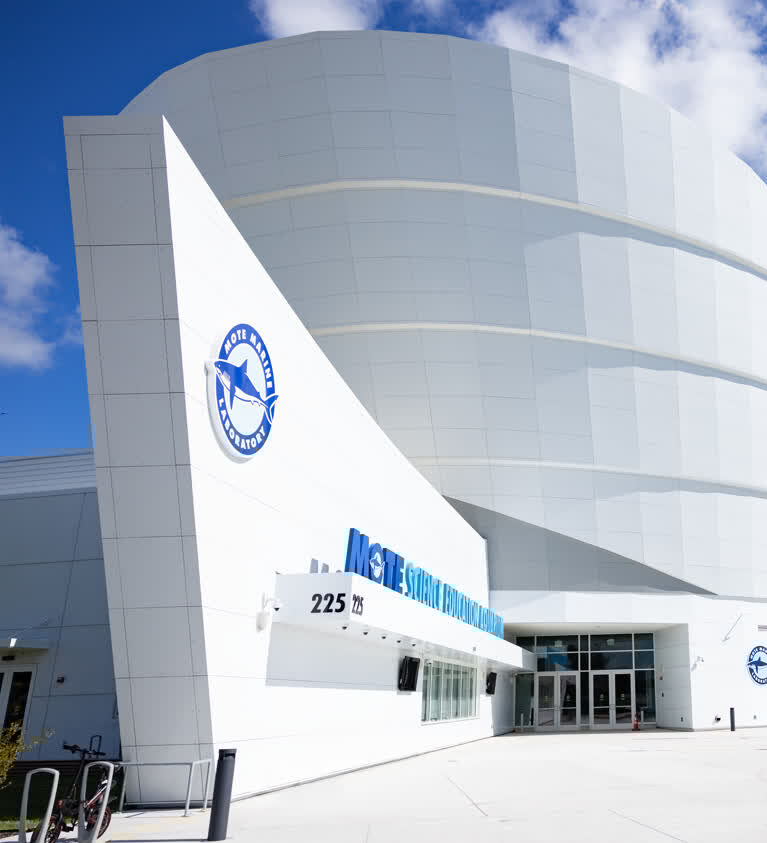
I always had a soft spot for the old Mote Aquarium on City Island — it had a great, homegrown feel to it, and I recommended it to guests for years. So when I finally got out to the new one, I wasn't expecting to be blown away. It's called Mote SEA now (Science Education Aquarium), and it's moved out to UTC. I figured it would be a nicer version of the same place. I did not expect to spend three hours there and still feel like I rushed it.
If you're staying with us on Longboat, Lido, or St. Armand's and you're trying to decide what earns a full afternoon away from the beach, I can now say with confidence: this does. Here's what actually stood out.
The Scale of the Place Catches You Off Guard
The old aquarium on City Island was cozy and a little scrappy, and that was always part of its charm — it felt like a place run by people who genuinely loved the water, which it was. Mote SEA is a different animal entirely. It's a 146,000-square-foot building at 225 University Town Center Drive, holding more than a million gallons of water across three floors — roughly twice the size of what it replaced, and it opened in October 2025. Mote's actual research campus — the labs, the scientists, the working side of the operation — is still back on City Island. What moved out to UTC is the part built for visitors, and it shows. This building was designed from scratch to be walked through, not just housed.
I'll admit the location surprised me at first. UTC is inland, up near University Parkway and I-75, not on the water. But once you're inside, that stops mattering — the building creates its own ocean.
The Gulf Coast Tank Is the Showstopper
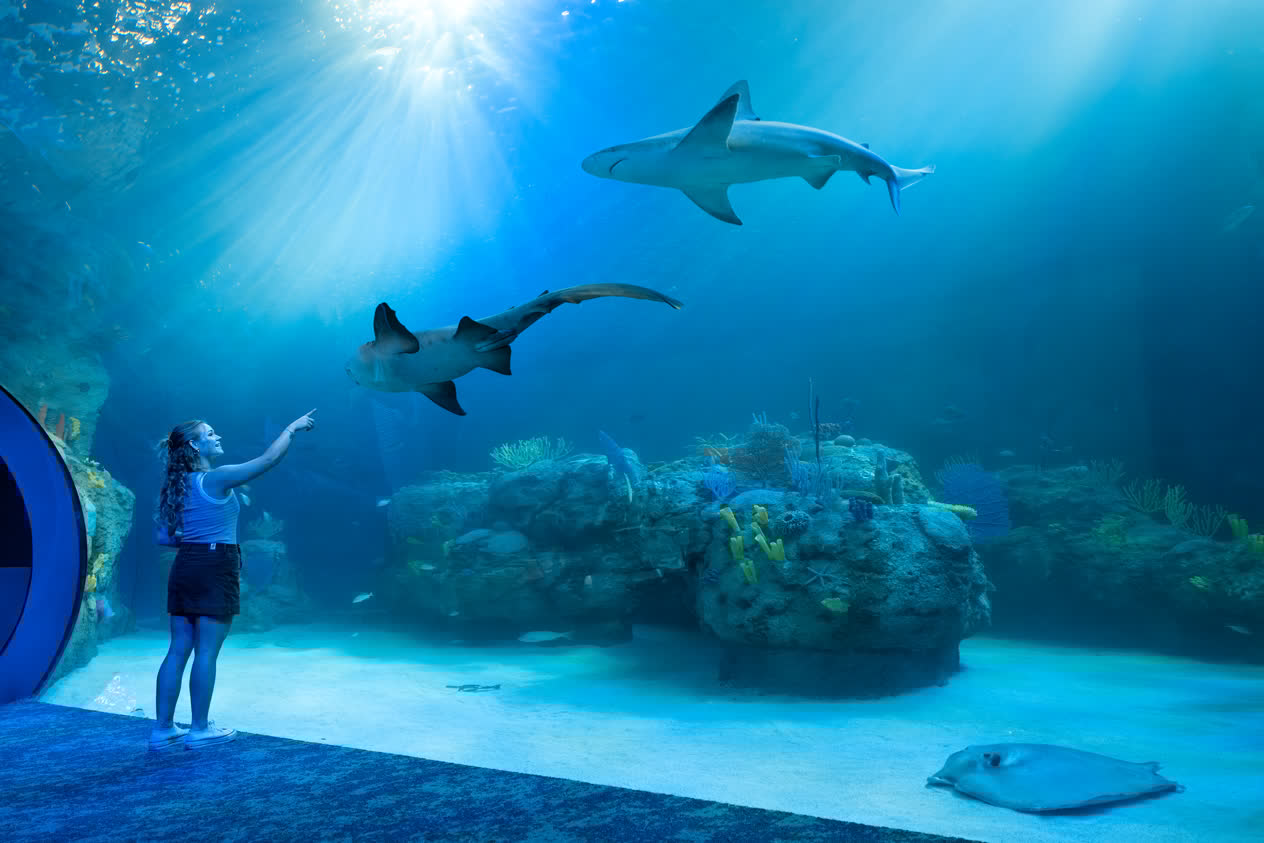
The Florida's Gulf Coast Gallery is the one everyone's phone comes out for, and it deserves it. The centerpiece is a 400,000-gallon habitat where sandbar sharks, sand tiger sharks, rays, and sea turtles glide right over your head as you walk beneath it. I stood there longer than I want to admit, just watching the shapes pass overhead. There's also a touch pool where you can actually run a hand along a stingray, which is exactly the kind of hands-on moment that makes a place stick in a kid's memory.
Upstairs, there's a quieter second-floor observation deck looking down into the same habitat, next to a display about Eugenie Clark — Mote's founder, known as the "Shark Lady," who started the whole organization out of a one-room lab back in 1955. Worth a minute if you're the type who likes to know why a place exists, not just what's in the tank.
Indo-Pacific: Penguins, an Octopus, and a Reef You Can Touch
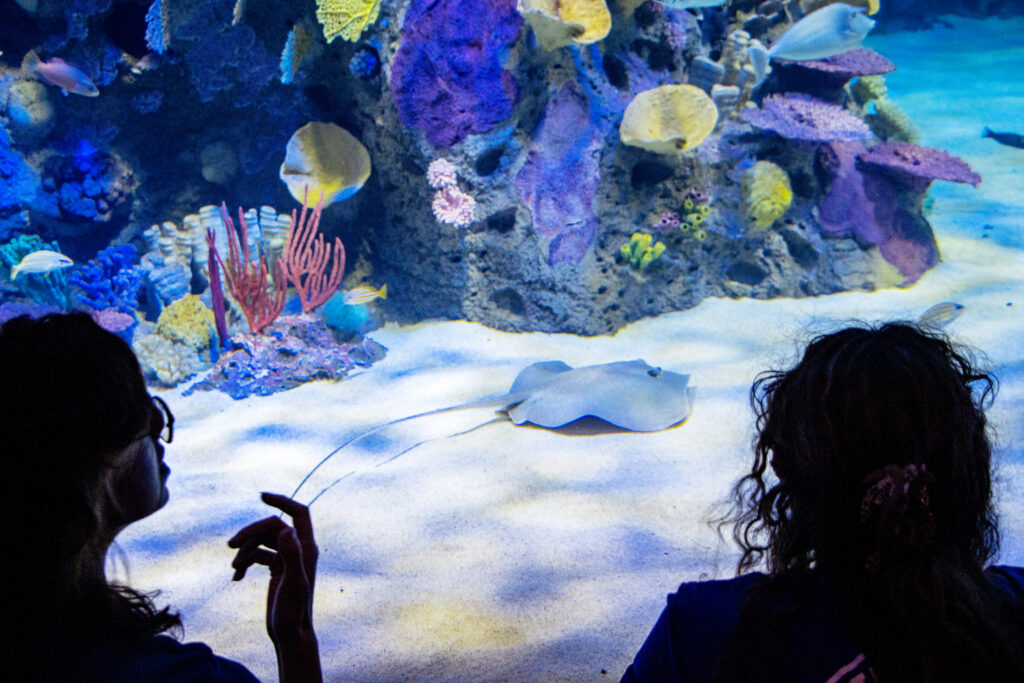
This is the gallery that had the most "wait, they have that here?" moments for me. There's a giant Pacific octopus that tracks you through the glass in a way that's genuinely a little unsettling — in a good way. There are reef sharks, an epaulette shark (a small, oddly charming species that can actually walk along the seafloor on its fins), and a wall of blueface angelfish and other reef color that looks almost fake it's so vivid.
Then there's a colony of Humboldt penguins, which I was not expecting to find in a Sarasota aquarium and which stopped me in my tracks anyway. And like the Gulf Coast gallery, there's a touch station here too — sea stars, anemones, and other invertebrates you're invited to actually handle, not just look at through glass.
Florida Waters: Manatees, Otters, and a Snapping Turtle That Means Business

The Florida Waters Gallery traces the path rain takes from the state's interior out to the sea, and it's home to the manatees — one of the main reasons I'd bring an out-of-town guest here over almost anywhere else. There are also North American river otters (easily the most entertaining animals in the building, full stop), a gopher tortoise, and an alligator snapping turtle that looks like it has opinions. Nearby, in the atrium, there's a "Tech in the Depths" display showing the actual equipment Mote's scientists use to study the ocean floor thousands of feet down — a nice reminder that this is a working research organization, not just an attraction.
Beyond the Tanks
A few things worth knowing that aren't animal exhibits: there's a Virtual Reality Experience on the third floor near Florida Waters that drops you into an underwater world without getting wet, a Quarterdeck Terrace on the third floor with a real view out over Nathan Benderson Park, and Bite Cafe on-site if you don't want to leave for lunch. There's also a gift shop on the first floor, a hurricane simulator, and a few penny-smasher machines for the kids. We were there close to three hours and still didn't linger everywhere we could have.
Good to Know Before You Go
Mote SEA is open 9:30 a.m. to 5 p.m. daily at 225 University Town Center Drive, Sarasota. Tickets are timed-entry, and it sells out on weekends and during spring — I'd book ahead rather than plan on walking up. Pricing is a "plan-ahead" model, so tickets bought at least 60 days out run the lowest rate (currently around $32 for adults, $24 for youth ages 3–12, and free for kids under 3). Parking is free in the lots on the property. Plan on 1.5 to 3 hours for a full visit, and note that re-entry isn't allowed once you leave, so pace yourself.
Why This Belongs on Your Itinerary
I manage vacation rentals across Longboat Key, Lido Key, and St. Armand's, and I'm always looking for the answer to "what should we do on our one non-beach day?" This is now my answer. It's a short drive up from the islands, it genuinely works for every age in a group, and unlike a lot of attractions that trade on nostalgia, this one is brand new and clearly built to impress.
The photos here are straight from Mote's own site for now — I'm heading back soon with a camera to get our own shots of the tanks and galleries, and I'll swap them in once I do. Until then, take my word for it: this one's worth the trip.